
The Goal Is Not the Quarter
We've been conditioned to think in quarters. Q1. Q2. Q3. Q4. Planning cycles, review meetings, and scorecards all tied to 90-day windows. But here's the uncomfortable truth: your goals don't care about the calendar.
Why We Use Quarters
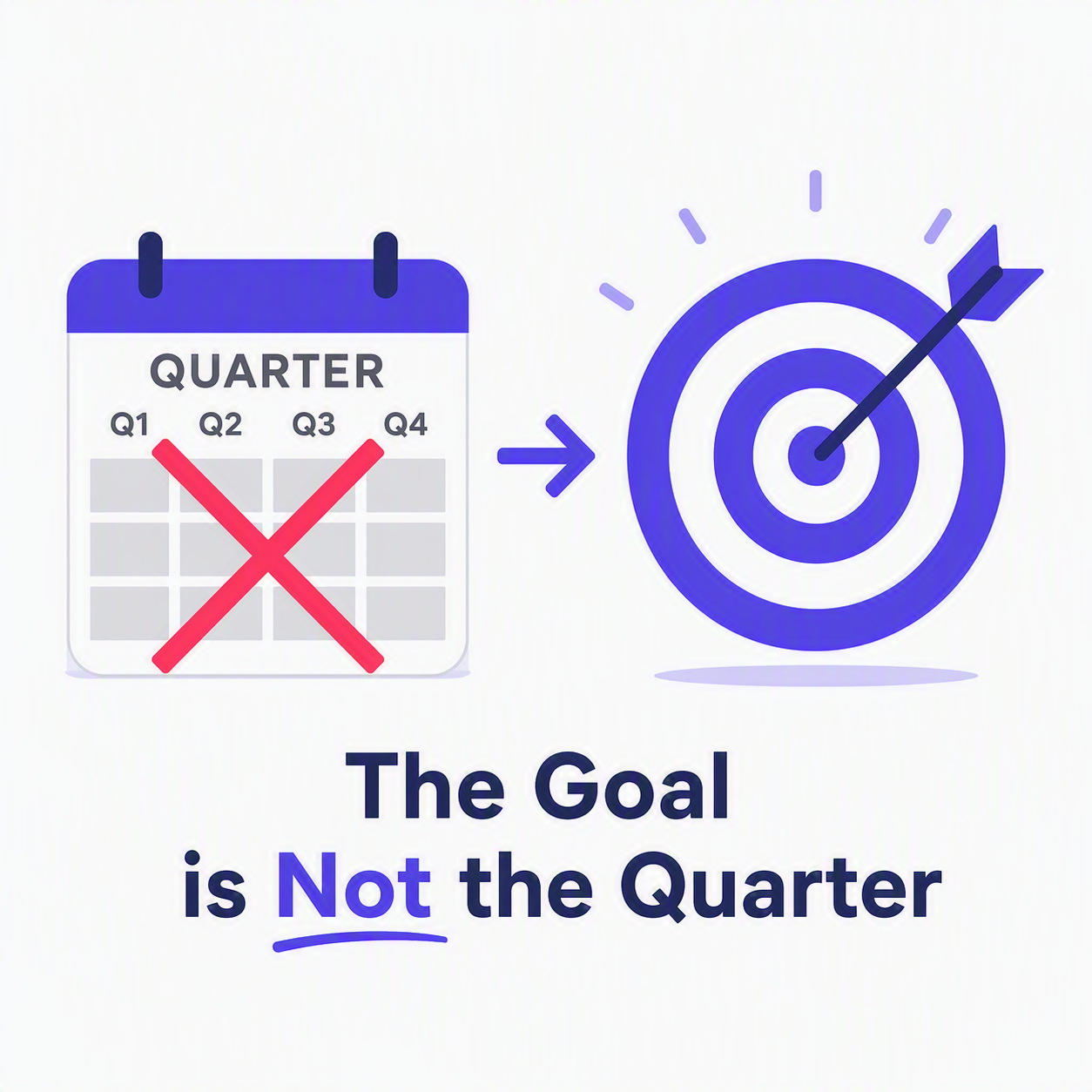
Quarterly cycles provide rhythm. They create checkpoints for reflection and alignment. They match financial reporting. They feel structured and manageable. All of that is useful—but only if the quarter serves the goal, not the other way around. Bain & Company's research in Harvard Business Review makes the case that fixed planning cycles are giving way to dynamic, adaptive ones—and goal timelines are no exception.
The problem starts when you force every objective to fit 90 days. Some goals need six weeks. Others take six months. Twisting them into quarterly boxes distorts the work.
The Cost of Forcing the Fit
When you lock goals into quarters, you create arbitrary pressure. Teams rush to finish something that isn't ready because the quarter is ending. They split multi-month initiatives into pieces that make no sense on their own. They delay starting work on a three-week project because "we're already mid-quarter."
Worse, it shifts focus from outcomes to timelines. Success becomes "we finished on time," not "we achieved the result." The quarter becomes the goal.
What Changes When You Decouple
Let objectives have their own timelines. If an outcome logically takes two months, plan for two months. If it takes eight weeks, set that expectation. If it's a year-long effort, treat it that way.
This doesn't mean abandoning structure. It means aligning structure to reality. Track progress continuously. Use quarterly checkpoints to review, reflect, and reset priorities. But don't force goals to expire just because the calendar turned. Harvard Business Review argues that in uncertain conditions, the ability to adapt quickly matters more than the accuracy of the original plan.
The Mindset Shift
Ask: "What outcome are we driving, and when should we realistically expect to see it?" Not: "What can we squeeze into the next 90 days?"
This question reframes planning around impact, not cadence. It encourages realistic timelines. It reduces the pressure to overpromise and underdeliver. And it stops teams from treating quarters like finish lines.
How to Implement This
Start by setting objectives with flexible start and end dates that reflect the work, not the calendar. Keep tracking progress continuously—check in weekly or bi-weekly as data becomes available. Use quarterly reviews as reflection points to assess overall direction and set new priorities.
Easy OKR supports this approach. Set custom timeframes for each objective. Monitor progress in real-time. Use cycles as optional milestones, not mandatory containers.
The Bottom Line
Quarters are useful for creating rhythm and reflection. They're terrible as constraints. Let your goals define the timeline. Use quarters to review, not restrict.
The goal is not the quarter. The goal is the outcome. Design your system around that truth, and OKRs start working the way they're supposed to.