
AI Made Strategy Cheap. Execution Is Still the Moat.
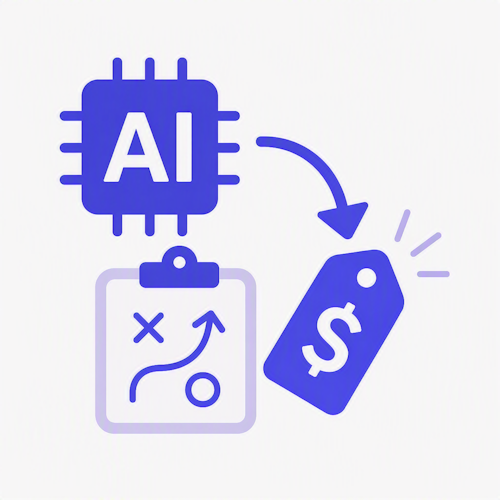
Ask an AI tool to draft a market analysis, a SWOT breakdown, or a five-year growth strategy, and you'll have a plausible-looking document in minutes. A few years ago, that kind of strategic output required a consulting engagement or a dedicated strategy team. Now it's nearly free. That's genuinely useful, but it also means strategy itself is no longer the differentiator it used to be. Everyone has access to the same analysis. What still separates organizations that win from those that don't is whether anyone actually does something with it.
Strategy Was Never the Hard Part for Long
This has always been somewhat true. Plenty of organizations in the same industry land on similar strategic conclusions: expand into this segment, cut costs here, invest in that product line. The competitive advantage rarely came from having a uniquely brilliant strategy nobody else thought of. It came from executing a reasonable strategy consistently and well while competitors talked about theirs in quarterly meetings and moved on. AI has simply made this dynamic more visible by collapsing the cost of producing strategic-sounding output to almost nothing.
The New Bottleneck Is Follow-Through
When a strategy document was expensive and slow to produce, the act of producing it felt like progress on its own. Now that producing one takes minutes, that illusion is harder to sustain. The real question shifts immediately to: what changes on Monday morning because of this document? Most strategic plans, AI-generated or not, fail at exactly this step. They describe a destination without specifying who is responsible for which piece of the journey, or how anyone will know if they're on track. This is the same gap research on strategy execution keeps finding: the companies that pull ahead aren't the ones with the cleverest plan, they're the ones that consistently translate the plan into owned, trackable commitments.
OKRs Are the Execution Layer Strategy Needs
This is precisely the gap OKRs close. A strategic plan says where the organization wants to go. OKRs translate that into Objectives owned by specific teams, with Key Results that are measurable and time-bound. Without that translation step, a strategy remains a document. With it, the strategy becomes a set of concrete commitments people can actually be held to, and check in on regularly.
Put differently: AI can help you generate the "what" faster than ever. It still can't decide the "who does what by when" and it can't do the work of actually delivering on it. That remains entirely human, and it's where the real competitive gap now lives.
Speed Without Direction Is Just Noise
There's a related risk worth naming. AI doesn't just make strategy cheaper, it makes execution of individual tasks faster too: more code shipped, more content produced, more analysis run. If that speed isn't pointed at something specific, it just produces more output, not more progress. A team moving fast without a clear Objective can ship a lot and still miss what actually matters to the business. Clear OKRs give that speed somewhere to go, so faster execution turns into faster progress instead of faster busywork.
What This Means Practically
If your organization is using AI to speed up strategic planning, and most are starting to, treat the output as a starting point, not a finished plan. Take the priorities it surfaces and push them one step further: who owns this, what would prove it's working, and how will we check on it. That step is exactly what turns a strategy document into OKRs. Easy OKR is built for that translation step specifically, since it's designed to be the fast, low-friction place where a strategic direction becomes something a team can actually track and act on, rather than another document that gets written once and never opened again.