
From Setting Goals to Managing Progress
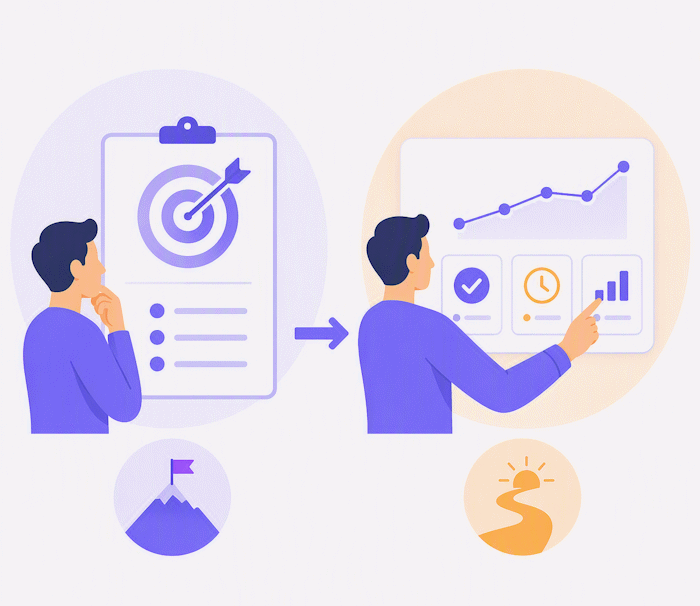
Most OKR advice focuses on the start: how to write objectives, craft key results, and align teams. But setting goals is the easy part. The hard part—the part that determines success—is what happens after.
The Planning Trap
Traditional OKR frameworks treat goal-setting as the main event. Teams spend days in planning workshops, debating wording, negotiating scores, and cascading objectives across the org. By the time planning is done, everyone is exhausted.
Then execution starts—and the process goes silent. Teams work heads-down until the end of the quarter, when someone remembers to update the tracking tool. Goals sit untouched until the final review meeting, where everyone scrambles to justify their scores.
The system optimizes for setting goals, not managing them. That's backward.
Continuous Progress Management
Shift the focus from planning to tracking. Spend less time perfecting your objectives and more time monitoring whether they're on track. Make progress visibility the priority, not alignment ceremonies. McKinsey's research on the future of performance management found that ongoing, forward-looking feedback beats infrequent, backward-looking reviews.
This means checking in regularly—weekly or bi-weekly updates on key results. It means spotting problems early, when they're still small. It means celebrating momentum as it builds, not waiting for quarter-end to declare victory.
What Needs Attention?
The most valuable question isn't "How did we score?" It's "What needs attention right now?" Which key results are stalling? Which objectives haven't seen progress in weeks? Where are teams stuck?
Answering this in real-time changes everything. You course-correct before problems compound. You reallocate resources when it still matters. You keep goals alive instead of letting them drift into irrelevance.
From Quarterly Reviews to Continuous Tracking
Stop treating reviews as the moment you assess progress. Reviews should confirm what you already know from continuous tracking. If you're surprised by the state of your OKRs in a quarterly review, you weren't paying attention.
Track progress continuously. Use lightweight check-ins to update key results as new data arrives. Surface what's off-track immediately. Reserve reviews for reflection and setting new priorities—not discovering problems that should have been visible weeks ago.
Practical Shifts to Make
Build a habit of weekly check-ins. Update key results as soon as you have new data—don't wait for a meeting. Use dashboards that highlight what needs attention, not just what's on track. Make progress visibility effortless. Gallup research shows employees who get weekly feedback from their manager are far more likely to be engaged than those who wait for a periodic review.
Easy OKR automates this. "What Needs Attention?" alerts surface stale key results, overdue activities, and objectives losing momentum. You see problems before they become crises. Progress management becomes continuous, not quarterly.
The Result
Teams that manage progress continuously outperform teams that plan perfectly. They adapt faster. They spot risks earlier. They stay focused on outcomes because outcomes are always visible.
Spend less time setting goals. Spend more time managing progress. That's where execution happens. That's where OKRs deliver value.