
Progress Reporting: The Necessary Evil of Goal Management
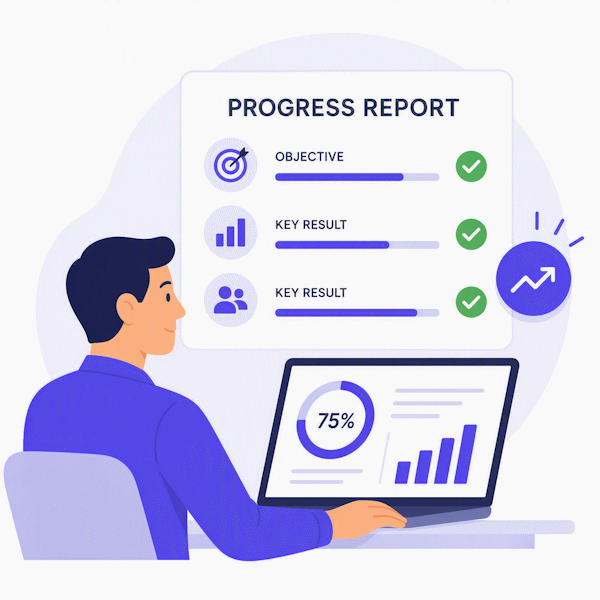
Almost nobody looks forward to filling in a status update. It interrupts real work, it can feel like busywork on top of busywork, and in badly run organizations it's used more to assign blame than to help anyone. And yet, goals that aren't reported on don't fail loudly. They fail silently. They quietly stop being worked on, nobody notices for weeks, and by the time anyone checks, the quarter is over and nothing happened. Reporting is annoying. It's also the only thing standing between a goal and quiet neglect.
Why Reporting Gets a Bad Reputation
Most people's dislike of progress reporting isn't really about reporting itself, it's about bad implementations of it. Long status meetings where half the room isn't relevant to what's being discussed. Reports written for an audience that never reads them. Formats that ask for more detail than anyone actually needs to know whether something is on track. When reporting feels like performing effort for an audience rather than communicating something useful, people resent it, correctly.
What Good Reporting Actually Requires
Useful progress reporting answers exactly one question well: is this Key Result on track, and if not, what's the plan? Everything beyond that is optional detail. A short weekly or biweekly update that states current progress against the target, a one-line note on what's helping or blocking it, and nothing more, is almost always enough. Most reporting that feels burdensome is burdensome because it's asking for far more than that.
Make It Fast or People Will Skip It
There's a direct relationship between how long an update takes and how consistently people actually do it. If updating a Key Result takes two minutes, most people will do it, even on a busy week. If it takes twenty minutes of digging through a spreadsheet, formatting a document, or navigating a clunky enterprise tool, it gets pushed to tomorrow, and tomorrow, until it's simply skipped. This is one of the most common reasons OKR programs quietly die, not because the goals were wrong, but because the reporting mechanism was too heavy to sustain past the first few weeks of enthusiasm.
This is a big part of why Easy OKR keeps check-ins deliberately lightweight: a quick number update and an optional short note, nothing more required. The framework only works if the habit survives contact with a genuinely busy week, and that means the reporting step has to be fast enough that skipping it takes more effort than just doing it.
Reporting Should Trigger Action, Not Just Record History
A report that just logs "we're at 40% progress" without prompting any response is only half useful. The real value of reporting shows up when an off-track Key Result actually leads to a conversation: what's blocking this, does the target need to change, does someone need help. Research on workplace motivation backs this up: visible, tracked progress on meaningful work is one of the strongest drivers of motivation there is, but only when people can actually see that the progress leads somewhere. Reporting that exists purely as a record, with no expectation that anyone acts on what it shows, tends to become a formality people fill in without thinking, which defeats the purpose entirely.
Build the Habit Before You Need It
Teams that only report on progress when leadership asks for it end up scrambling to reconstruct three months of activity from memory, which is neither accurate nor useful. Teams that build a short, regular reporting rhythm from the start of a cycle always have an up-to-date picture, and course-correcting becomes routine instead of a fire drill. The difference isn't effort, it's consistency, and consistency is only realistic when the reporting itself is quick enough to not feel like a chore.