
OKR Basics for Beginners
If you are new to OKRs, the most useful thing to do is start simple. The model is not complicated, but people often add complexity too soon. This article explains the basics and shows you how to adopt OKRs in a practical way. Once you understand the core idea, the rest of the framework becomes much easier to learn. Research on the topic, including this Harvard Business Review analysis of OKR adoption, points to the same lesson: keep the system light and team-focused rather than turning it into heavy process.
What makes a good Objective?
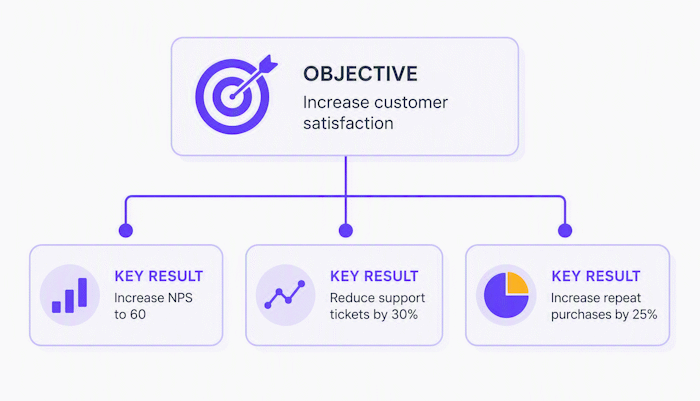
An Objective is a clear statement of what you want to achieve. It should be motivating and focused. A good objective answers the question: what meaningful change do we want to make? Objectives are written in plain language, not in numbers. They should be short enough to remember without looking them up, and inspiring enough that people want to work toward them.
Examples of strong objectives:
- Become the most trusted platform for small business payments
- Build a product that works perfectly offline
- Make our onboarding experience world-class
What makes a good Key Result?
A Key Result is a measurable outcome that shows progress toward the objective. It should be specific, time-bound, and verifiable. A good key result answers the question: how will we know if we are making real progress? Avoid key results that just list a task, such as "launch new website." Instead, describe the outcome that task is meant to produce, such as the increase in visitors or sign-ups it should bring.
Examples of strong key results:
- Increase NPS from 42 to 65
- Reduce page load time from 4.2s to under 2s
- Complete onboarding in under 5 minutes for 80% of new users
Start with 3-5 OKRs per quarter
One of the biggest mistakes teams make is trying to track too many OKRs. Google's own guidance on developing team OKRs recommends starting small, so start with 3-5 organization or team OKRs per quarter. This forces prioritization and makes it easier to stay focused. Each objective should have 2-4 key results. More than that makes it hard to know which ones truly matter, and progress updates start to feel like a chore instead of a useful check-in.
Keep it simple at first
Do not worry about advanced features like alignment, confidence scores, or cascading until you have a few cycles under your belt. Focus on writing clear objectives and measurable key results, and review them every week. Give yourself permission to write imperfect OKRs in your first quarter. You will learn far more from setting a goal, tracking it, and adjusting than from spending weeks trying to write the perfect one.
A simple beginner checklist
Before you finalize your first OKRs, run through this short checklist:
- Does the objective describe an outcome, not a list of tasks?
- Can each key result be measured with a number?
- Have you limited yourself to 3-5 objectives for the quarter?
- Does everyone on the team know who owns each key result?
If you can answer yes to each question, you are ready to start your first OKR cycle.